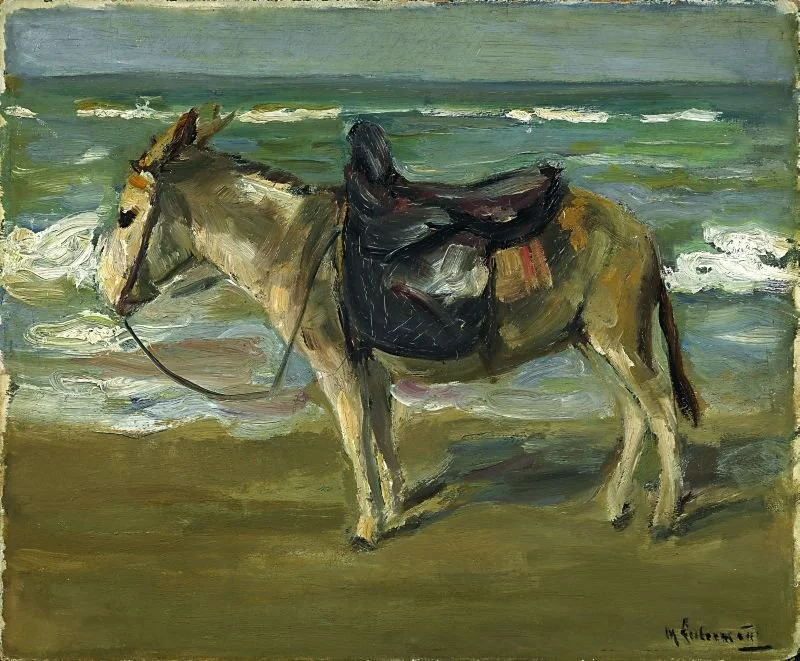
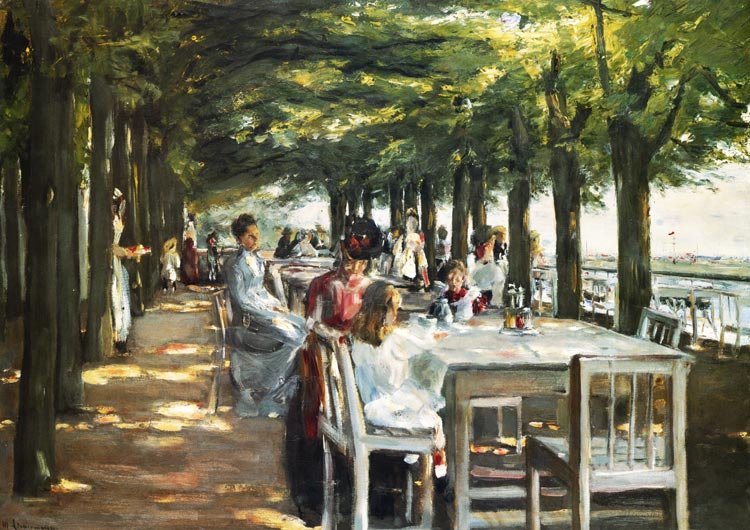
Max Liebermann
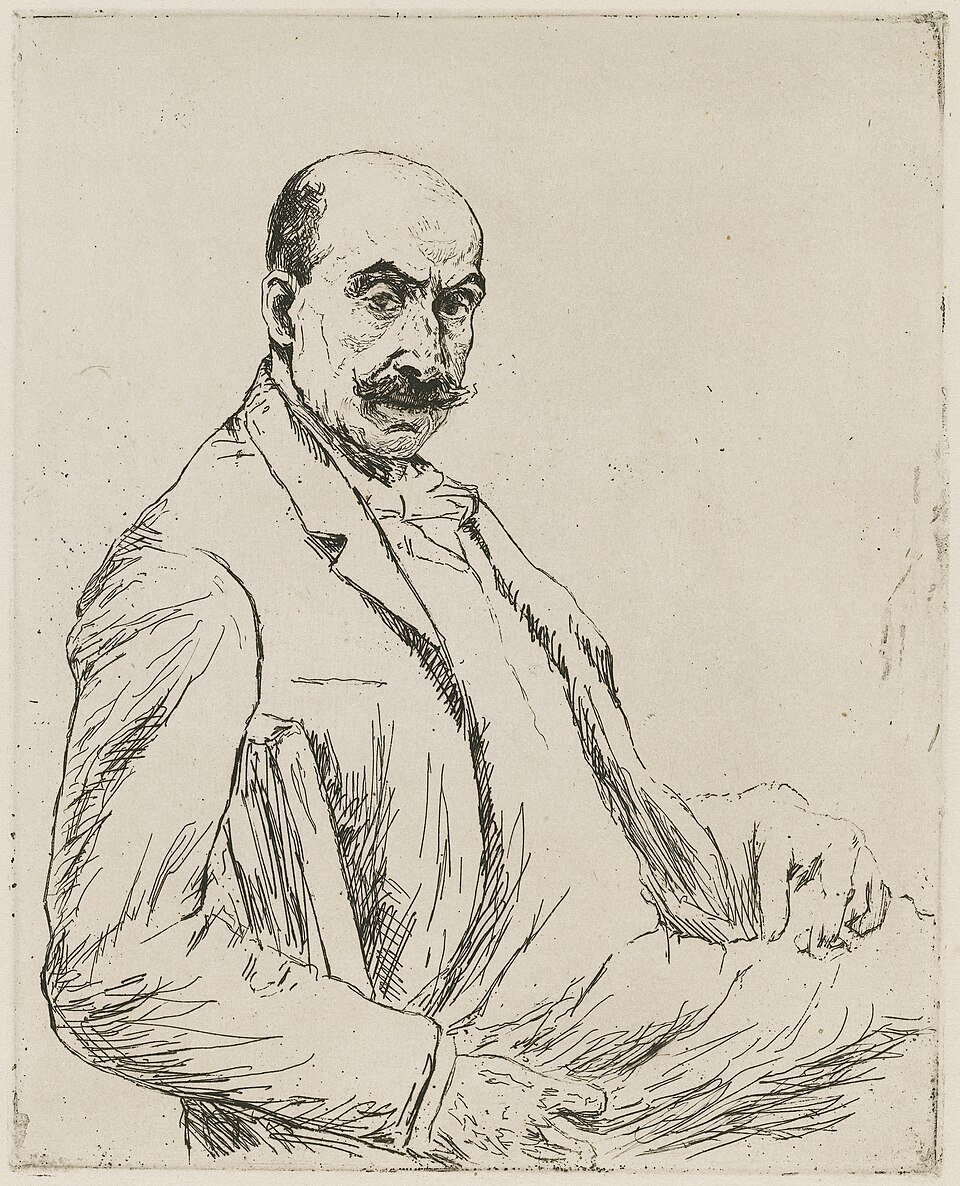
Self-Portrait 1906
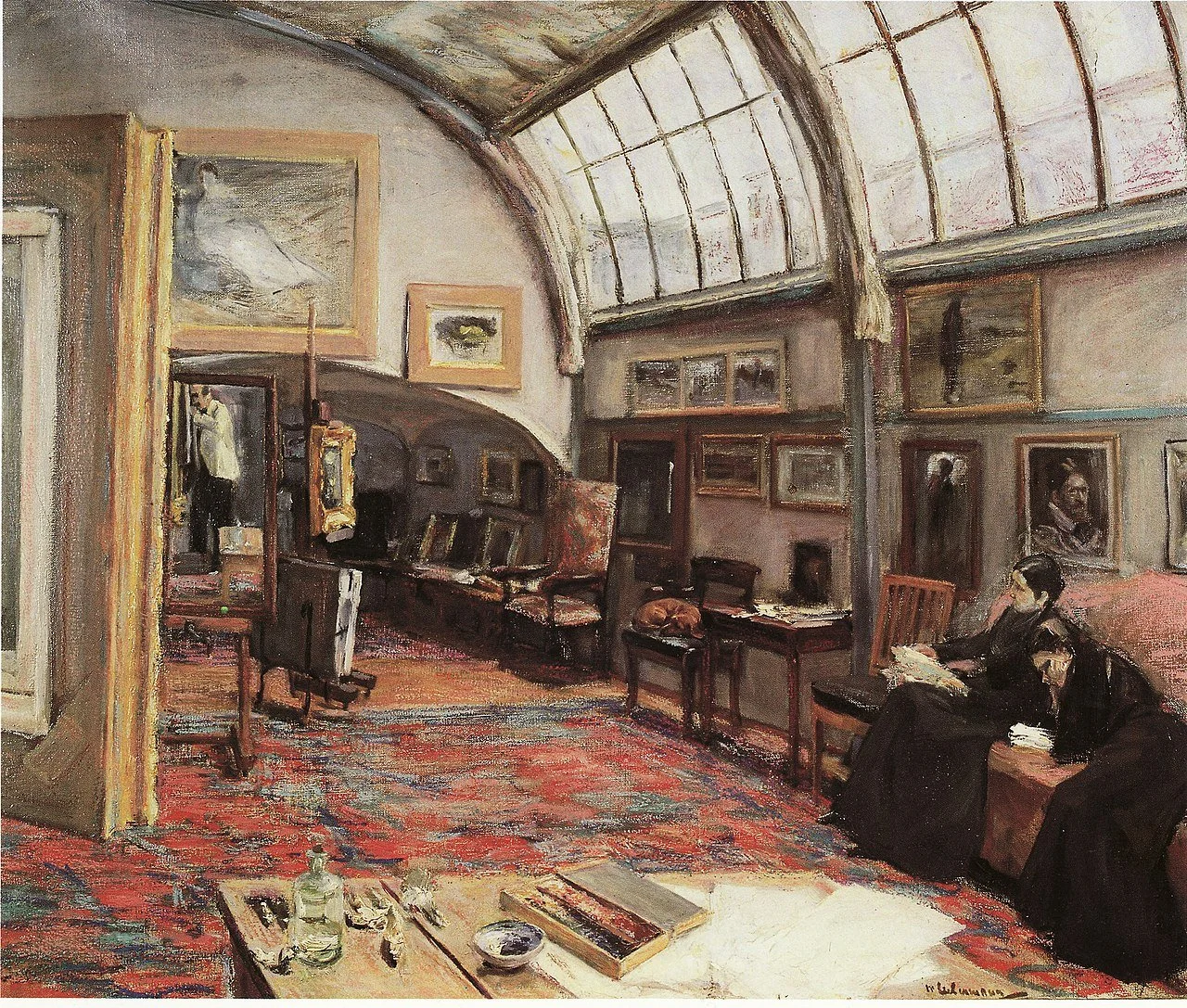
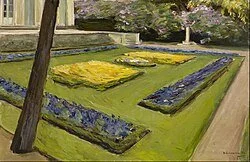
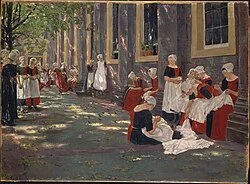
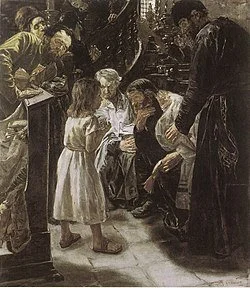
Max Liebermann (20 July 1847 – 8 February 1935) was a German painter and printmaker and a leading figure in the development of Impressionism in Germany and continental Europe. Alongside his work as an artist, he assembled one of Germany’s most important collections of French Impressionist art.
From 1899 to 1911, Liebermann led Germany’s foremost avant-garde group, the Berlin Secession, which he had helped found in 1898. The Secession was an association of progressive artists who created an independent exhibition society to promote modern art. As its president, Liebermann recruited leading German Impressionists and established the group as a major force in the art world.
After World War I and the German Revolution, he became president of the Prussian Academy of Arts in 1920. The Berlin Secession and other similar movements continued to exist alongside the Academy for some time. Liebermann worked to unite these different artistic currents under the Academy’s umbrella. Faced with the task of rebuilding the former imperial institution, he introduced democratic reforms, supported a free educational system, and increased the Academy’s public profile. Although his own style came to be regarded by some as old-fashioned, he continued to advocate for artistic progressiveness and for the principle that art should remain independent of politics.
Due to illness, Liebermann resigned as president of the Academy in 1932 and was named honorary president. However, after the Nazi Party came to power on 30 January 1933, he—like other Jewish artists—was persecuted. His works were removed from public collections. He resigned from his honorary presidency, his senatorial posts, and his membership in the Prussian Academy of Arts, stating to the press: “During my long life I have tried, with all my might, to serve German art. In my opinion, art has nothing to do with politics or ancestry. I can no longer belong to the Prussian Academy of the Arts… since my point of view is no longer valued.”
Liebermann died on 8 February 1935. His death received little to no coverage in the Nazi-controlled press. The Academy of Arts, by then aligned with the regime, refused to honor its former president. His daughter, Katharina Riezler, fled to the United States in 1938.
In addition to being an artist, Liebermann was a major art collector, particularly of French Impressionist works, and the largest such collector in Germany. Because he and many of his fellow collectors were Jewish, they were targeted by the Nazis. Liebermann left his extensive private collection to his wife, Martha, upon his death. After she learned in 1943 that she was to be deported to the Theresienstadt concentration camp, she took her own life. About six months later, the Gestapo confiscated most of Liebermann’s renowned private art collection from her apartment.
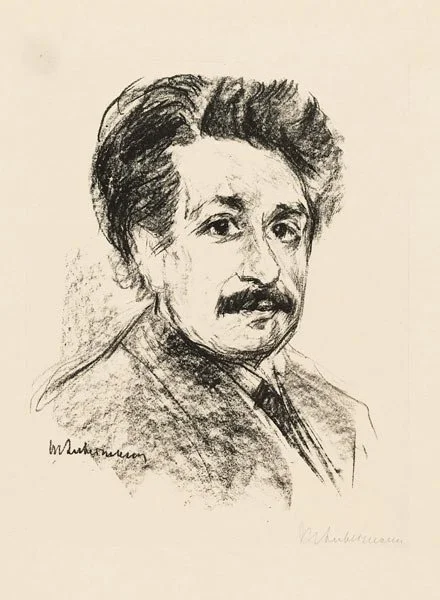
Albert Einstein 1922