
TREE CANOPY
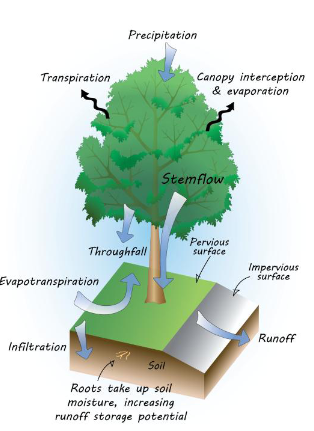
A canopy is an umbrella - the group of leaves at the top of the tree that creates shade. Canopies can be used strategically as part of Low Impact Designs (LID) in various ways, including managing heat with the shade, using the leaves to intercept rainfall, providing a buffer against cold winds in the winter, as well as filtering out pollutants.
How it manages rainwater:
Interception: Dense canopies can intercept rainwater by slowing the fall and decreasing the intensity of storms. They slow down the runoff process as raindrops move through the dense collection of leaves.
Increased Soil Infiltration: The roots of a tree also improve the soil surrounding it’s structure, allowing it to absorb more water when it does run off to the ground.
Transpiration: When the water is absorbed into the soil, the tree can use it to process, safely and naturally releasing the water into the atmosphere with the process of transpiration.
Phytoremediation: The tree can transform dangerous pollutants within the rainwater and soil into less harmful substances - including metals, organic compounds, fuels, and solvents, turning it into nutrients to help the tree grow.
SITE DESIGN
While trees can be planted anywhere, to use them for LID most effectively, one needs to plant them in the best spot for the site.
Important factors are:
Accommodation: As expected, the bigger and more dense the tree gets, the better it will be for shade, rainwater interception, etc. Make sure to give it enough space to grow as large as it possibly can get. Also, prune regularly for safety.
Porosity/Infiltration: Conduct a percolation test to make sure the soil is best for water infiltration - ideal infiltration rates are 0.5–2 in/hr for most trees.
Drainage patterns: Identify natural swales or low points where water already collects, but ensure these do not become waterlogged for long periods.
Sun exposure: Ensure adequate light for the species.
Rainwater Management Design Features
To help manage rainwater, one can use other LID techniques to assist with canopy growth and use the tree’s interception in the best possible way.
1. Tree Planting Basin (Micro-catchment)
Create a shallow basin (4–8 inches deep) around the tree’s drip line. The basin should have a gentle inward slope toward the trunk but keep the root flare above grade. Mulch the basin with 2–4 inches of organic material to reduce evaporation and erosion.
2. Infiltration Trenches or Bioswales
Connect multiple trees with bioswales (shallow vegetated channels) that slow, spread, and sink stormwater. Line the base with coarse compost or gravel under the topsoil to promote infiltration. Use native grasses, sedges, or groundcovers to stabilize soil.
3. Rain Gardens
If the tree is part of a larger LID system, integrate it into a rain garden sized to handle local rainfall (often 1” of runoff from impervious surfaces). Include overflow paths that direct excess water safely away from the tree’s root zone.
4. Permeable Surfaces
Surround trees with permeable paving or structural soils (in urban settings) to allow rainwater infiltration while supporting foot or vehicle loads.
There are a few reasons why Mane Cultivation would use tree canopies on the estate - due to the heat of the Big Sandy Basin, having shade against the sun will be incredibly useful to counteract overheating. With such dry soil, they allow the rain to evenly drop against the ground by being distributed among the leaves, helping the hydration of the land with just a single large tree.
To accomplish these goals, certain sections need to be allocated to amend soil and create as much shade to utilize as possible. Planting to the south and west will assist with bringing down temperatures. Planting 20’-30’ away will assist with fire breaks and only use drought tolerant and succulent plants in these zones - making sure the size matches safe density.
Frequently Asked Questions (FAQ)
What are the benefits of tree canopies for low impact design?
They intercept and reduce rainwater, lessening floods and helping infiltration with it’s root system.
Where should trees be placed in a design?
Plant trees on the upper edges (shoulders) of swales or rain gardens — not in the deepest point, which can stay too wet. Combine with native grasses or shrubs that tolerate variable moisture, with enough room to grow as large as possible.
Also be aware of fire safety when place trees close to buildings.
Can tree canopies be used with other water management strategies?
Yes, multiple strategies can be used together for stormwater management based on individual site requirements.